
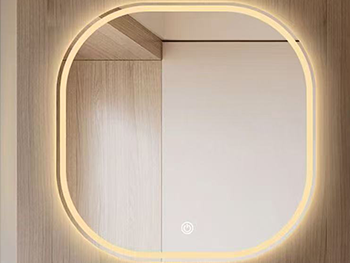
How Multifunctional Smart Mirrors Integrate with Smart Home Systems
Industry Background and Market Demand
The smart home industry has evolved beyond basic automation to integrated ecosystems where devices communicate seamlessly. Multifunctional smart mirrors represent a convergence of IoT, AI, and display technologies, addressing demand for personalized, space-efficient solutions. According to MarketsandMarkets, the global smart mirror market is projected to grow at a CAGR of 9.8% through 2027, driven by hospitality, healthcare, and residential sectors.
These mirrors combine traditional functionality with digital interfaces, offering features like health monitoring, virtual try-ons, and real-time data displays. Their integration with smart home systems hinges on interoperability standards such as Matter, Zigbee, or proprietary APIs, enabling synchronization with lighting, security, and climate control.
Core Technologies and Functional Architecture
1. Embedded Display Systems
Smart mirrors use either transparent OLEDs or LCD panels with two-way mirrors. The latter involves a semi-reflective coating that allows light from embedded displays to pass through while maintaining reflectivity. Display resolution (typically 4K for retail/hospitality) and brightness (300–500 nits for ambient light compensation) are critical.
2. IoT Integration Protocols
- Matter-over-WiFi/Thread: Ensures cross-brand compatibility.
- Custom APIs: For proprietary ecosystems (e.g., Samsung SmartThings).
- Edge Computing: Local processing reduces latency for real-time applications like gesture control.
3. Sensors and Input Methods
- Capacitive touchscreens or IR sensors for interaction.
- Ambient light sensors to auto-adjust display brightness.
- Optional biometric scanners (e.g., heart rate monitoring via PPG sensors).
Product Design: Materials and Manufacturing
Structural Components
- Frame: Aluminum alloys for durability and heat dissipation.
- Glass: Tempered (6–8mm thickness) with anti-fog coatings for bathrooms.
- Backplane: Modular design for easy upgrades (e.g., swapping display drivers).
Manufacturing Considerations
- Optical Bonding: Eliminates air gaps between layers to reduce glare.
- IP Ratings: IP65 for humidity-prone areas like bathrooms.
- EMI Shielding: Prevents interference with other smart devices.
Key Performance Factors
1. Latency: Sub-100ms response time for touch/voice commands.
2. Power Efficiency: Low-power modes extend lifespan (e.g., <5W in standby).
3. Software Stability: Over-the-air (OTA) update reliability prevents bricking.
Supplier Selection Criteria
For OEMs, critical evaluation points include:
- Display Panel Suppliers: BOE or LG for consistent quality.
- IoT Module Vendors: Nordic Semiconductor for energy-efficient connectivity.
- Certifications: FCC/CE compliance for RF components.
Industry Challenges
1. Interoperability: Fragmented ecosystems require custom middleware.
2. Privacy Concerns: Data from cameras/biometric sensors must be encrypted.
3. Cost: High-end models ($800+) face adoption barriers in residential markets.
Applications and Case Studies
1. Hospitality (Marriott’s IoT-enabled Bathrooms)
Smart mirrors sync with room controls, displaying weather and itinerary updates while adjusting ambient lighting based on guest preferences.
2. Healthcare (Remote Patient Monitoring)
Hospitals use mirrors with integrated cameras for telemedicine consultations, leveraging HIPAA-compliant data pipelines.
3. Retail (Virtual Try-On Solutions)
L’Oréal’s AI mirrors analyze skin tone and recommend products, reducing in-store consultation time by 30%.
Future Trends
1. AR/VR Integration: Overlaying navigation prompts or fitness coaching.
2. Self-Healing Glass: Minimizes maintenance for public installations.
3. Energy Harvesting: Solar-backed models for sustainability.
---
FAQ
Q: Can smart mirrors operate offline?
A: Basic functions (e.g., lighting control) work locally, but cloud-dependent features (e.g., weather updates) require WiFi.
Q: How durable are touchscreen mirrors in high-humidity areas?
A: IP65-rated models with hydrophobic coatings withstand 95% RH environments.
Q: What’s the typical ROI for commercial installations?
A: Hotels report 12–18 months payback via energy savings and upsell opportunities (e.g., ad displays).
---
This integration of multifunctional smart mirrors into smart home systems exemplifies the shift toward context-aware, user-centric environments. As standardization improves, expect broader adoption across sectors demanding both utility and aesthetic cohesion.
This website uses cookies to ensure you get the best experience on our website.


 Español
 Français
 日本語
日本語 العربية



 Phone
Phone
Comment
(0)